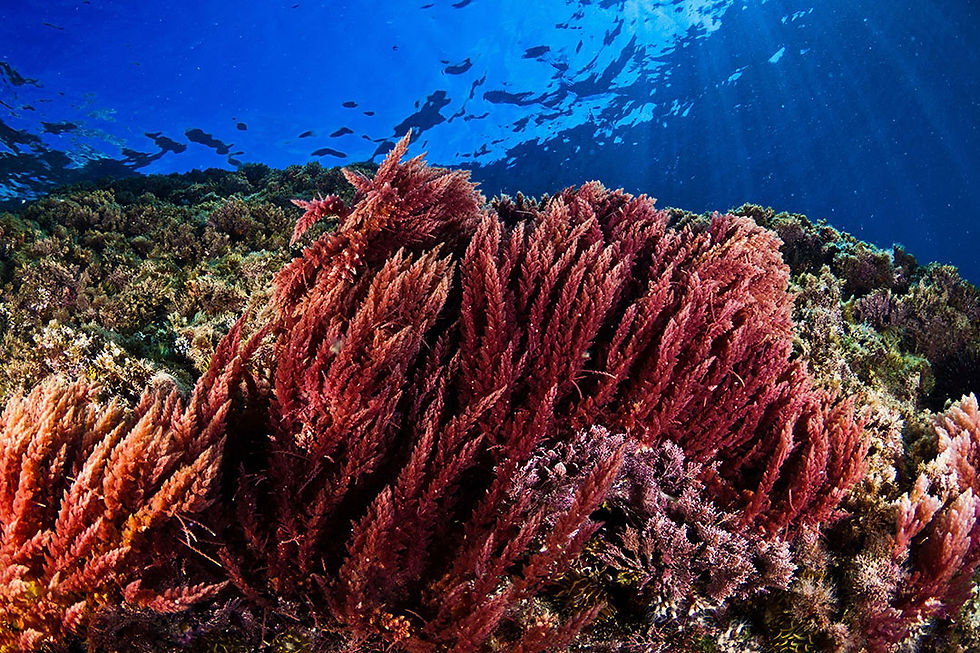
Reducing agricultural methane is one of the fastest and most effective ways to protect food supplies and fight climate change.
"Global methane emissions total about 689 teragrams (Tg) per year. 80 Tg (11.6% of total emissions) comes from enteric fermentation in livestock. Within enteric- fermentation methane, roughly 60 Tg (about 75%) is attributable to cattle, which are ruminant animals.” - Global Carbon Project
In 2006, a dairy farmer in Prince Edward Island, Canada, observed that cows grazing on seaweed along the shoreline were healthier and more productive.

This observation led to groundbreaking research by CSIRO, identifying Asparagopsis as one of the most effective natural solutions for reducing methane emissions.
How It Works
Methane is produced during digestion in ruminant animals.
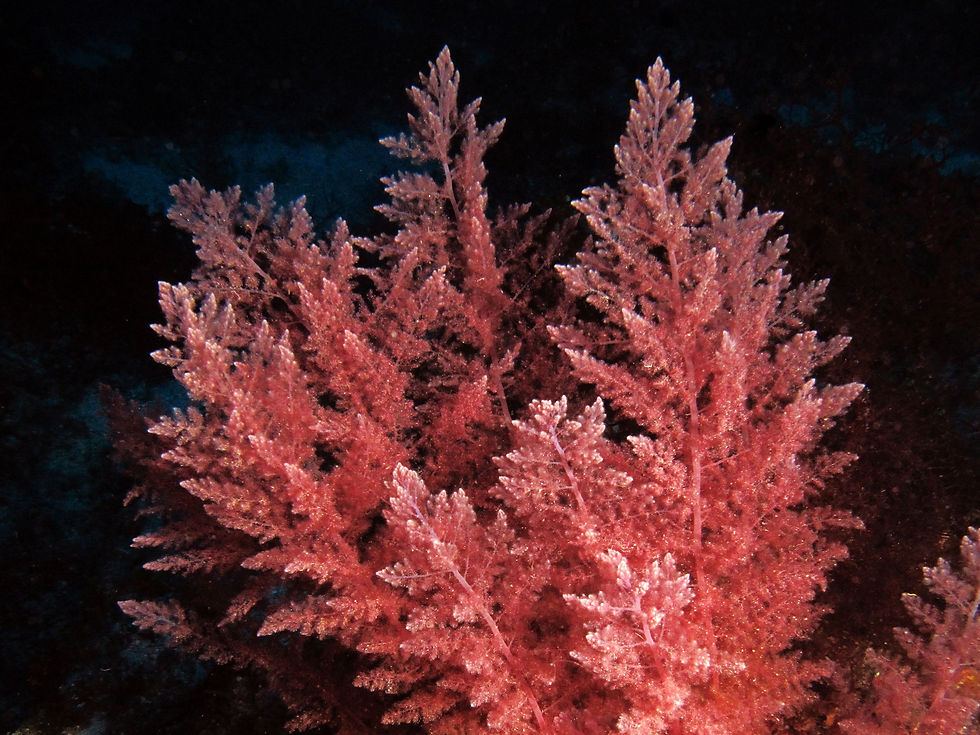
Asparagopsis contains natural compounds (bromoform) that disrupt this process, significantly reducing methane formation.
So why aren’t the world’s cattle already fed Asparagopsis?

01
Most countries are learning where and how to farm Asparaopsis for the first time.
02
While methane-reducing solutions exist, global deployment is constrained by supply.
03
F&W is building the biological and cultivation infrastructure required to scale these solutions globally.
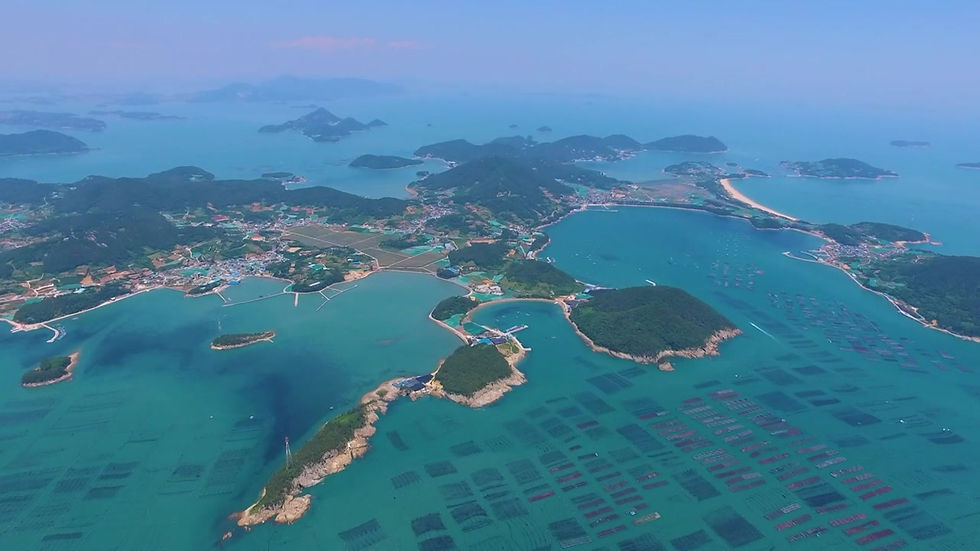
South Korea's 100,000 hectares of Seaweed Belt
Korean farmers have cultivated seaweed for over 400 years.
In 2024, NASA recognised Korea’s south coast as one of the world’s most productive marine environments.
At F&W we have the largest scalable capacities globally producing 2M tonnes of Asparagopsis each year.

And the best part...

South Korea’s kelp, nori and wakame grow October to April...
leaving the infrastructure free for Asparagopsis to grow in perfect conditions May to September.
EcoRumi
Growing Asparagopsis in protected ria coastline is a natural advantage.
Developing it into a commercial-grade, methane-reducing feed supplement is our patented technology.